
The MSR Lightning Ascent is one of those rare products that absolutely nails the core job it was built for—and still manages to have a few design decisions that will eventually break your heart and your crampon plate.
Most online reviews gush about “unbeatable traction”, “great durability”, and “best-in-class performance,” and to be fair, the Lightning Ascent does earn a lot of that praise. What they almost never talk about is what happens after years of real mountaineering use, when aluminum meets rock, thin sheet metal meets fatigue, and the snowshoe you depend on starts to literally tear itself apart.
This is a review about that part—what fails, where it fails, and how I fixed the most critical weakness instead of throwing them in the bin.
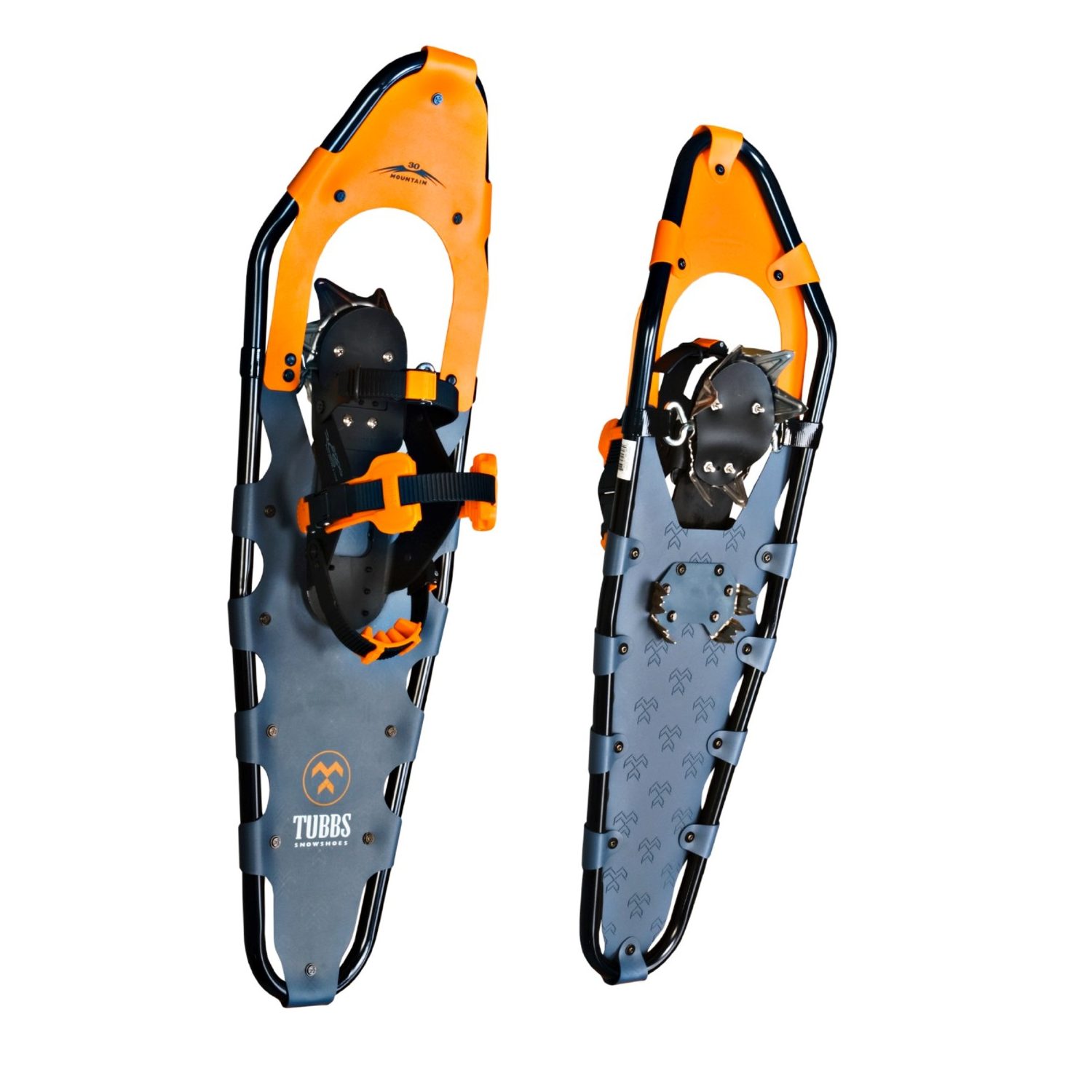
Like a lot of people, I started with Tubbs Mountain snowshoes. They looked aggressive, had a ton of surface area, and were cheaper than the high-end options. On gentle terrain they were fine. The moment the slope increased, the design fell apart.
The crampon never fully engaged because the big, floaty deck kept it suspended above the firm layer. Flotation was great; traction was terrible. Since the crampon was the only source of bite, that meant sliding, floundering, and burning energy for very little actual progress.
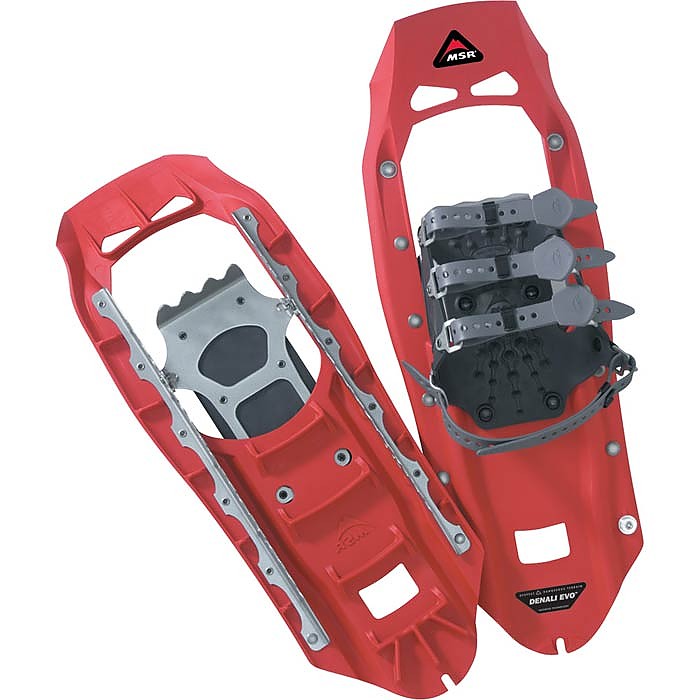
At the time, the MSR Denali was the default “serious” mountaineering snowshoe—plastic, loud, and outfitted with two ridge plates for grip. They worked, but they were hardly subtle, and I’ve never been a fan of plastic in cold, abusive winter conditions.
Then the MSR Lightning Ascent appeared.
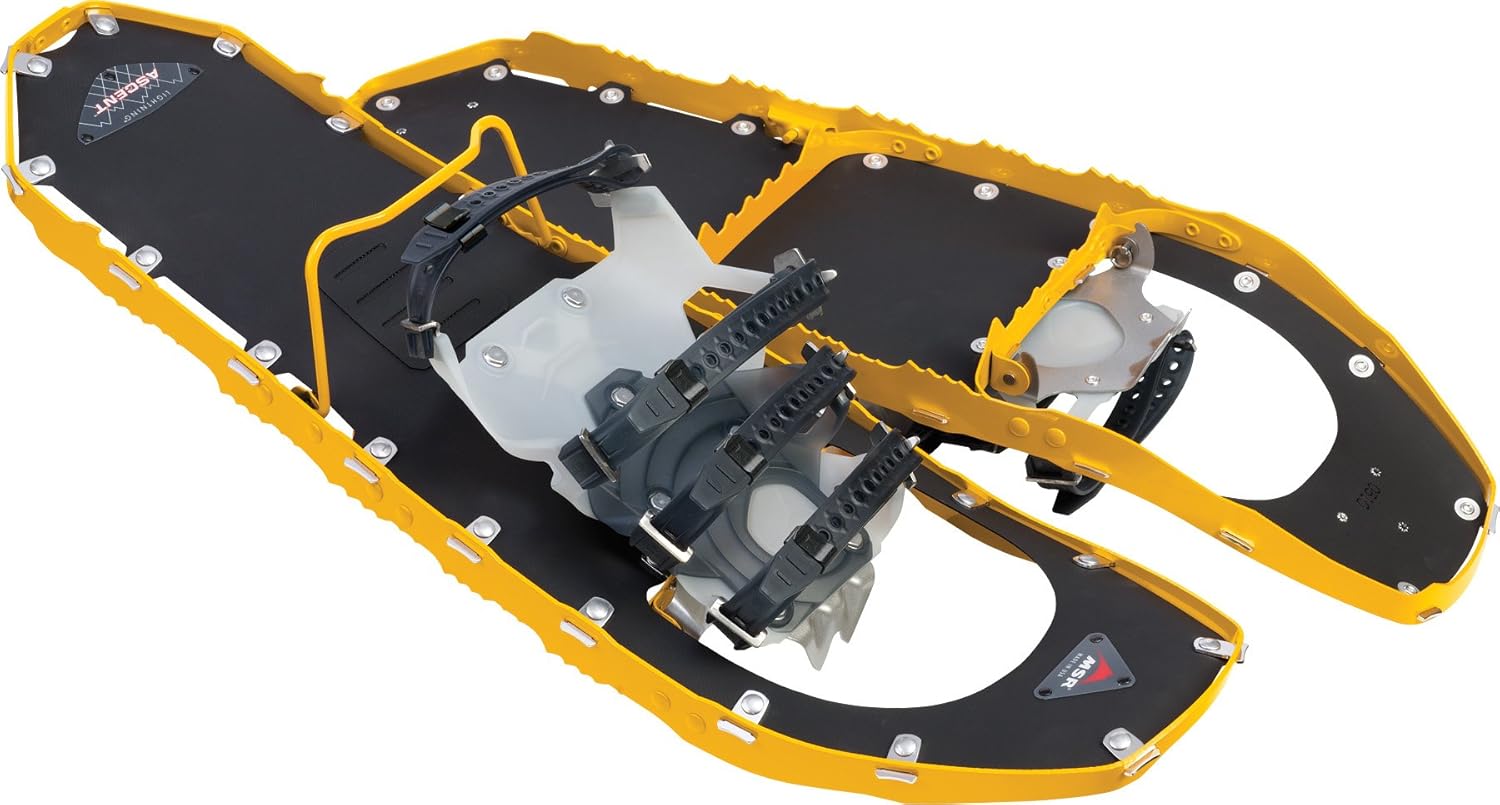
At first glance, they looked wrong: way too small to float well, especially compared to the Tubbs. But they were light, the “cookie cutter” frame edge was a genuinely new idea, and I desperately needed something that would actually work on steep winter trails. I bought a pair, knowing full well I was paying more than I wanted to.
Performance: Where They’re Almost Too Good
Let’s get the positives out of the way quickly, because they matter—but they’re not what most people are really looking for in a long-term review.
On steep winter mountaineering trails, the Lightning Ascents are fantastic. The serrated frame acts like a full-length crampon: the “cookie cutter” edge bites into firm snow and ice while the underfoot crampon does what it’s supposed to do. You don’t lose grip mid-stride the way you do with designs that rely on a single underfoot spike cluster.
In practical terms:
- They climb and side-hill with much more confidence than most traditional big-deck snowshoes.
- They don’t skate backwards on steeper pitches where other designs give up.
- They feel more like a technical tool than a casual snowshoe.
They’re sold in 22, 25, and 30-inch lengths. Which you choose is a classic compromise: short for agility, long for flotation. With the attachable tails, you can push the flotation up enough that they’re usable in soft snow, if that’s your usual environment. The heel lifts are genuinely useful on long climbs; I went so far as to modify mine so I can flip them up with an ice axe or pole hook rather than bending over each time.
My pair uses the original 3-strap binding. It can be a pain to fit when it’s deeply cold, but with some pre-fitting and a bit of tape, it will accommodate a wide range of boots and, once set up, generally stays where it should.
So yes: in terms of traction and technical capability, the Lightning Ascent absolutely delivers.
The Real Problems: Where They Wear Out and Break
After enough real-world use, three main weaknesses show up:
- The frame edge wears because the cookie-cutter edge is aluminum and, unsurprisingly, aluminum is soft. Drag them across rocks often enough and the teeth get rounded. It doesn’t kill the snowshoe, but you do slowly lose the aggressive profile that made you buy them in the first place.
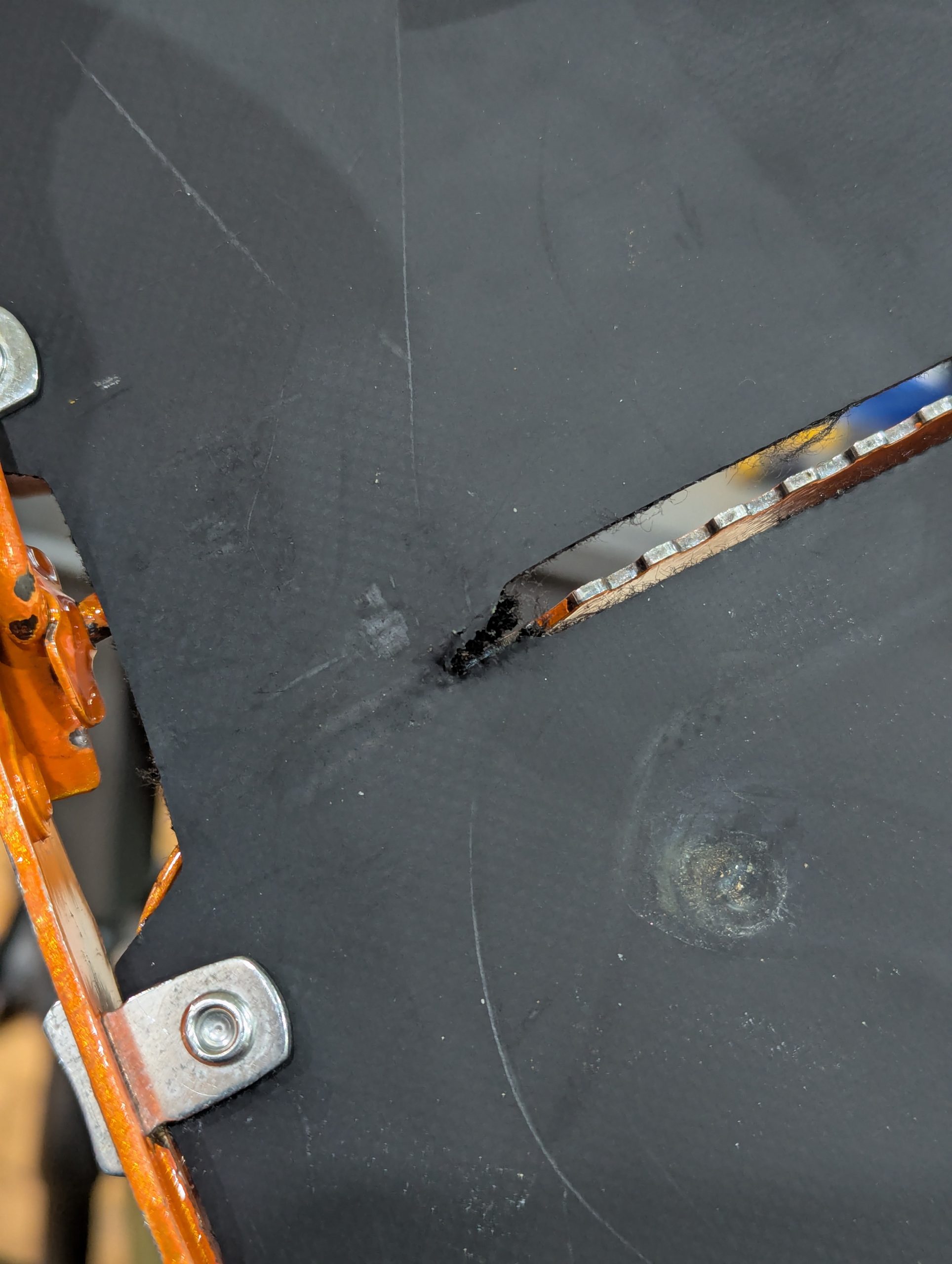
- The deck wears through at the rear cross-bar and MSR should have added reinforcement and didn’t. It’s not catastrophic at first, but it’s a predictable failure point.
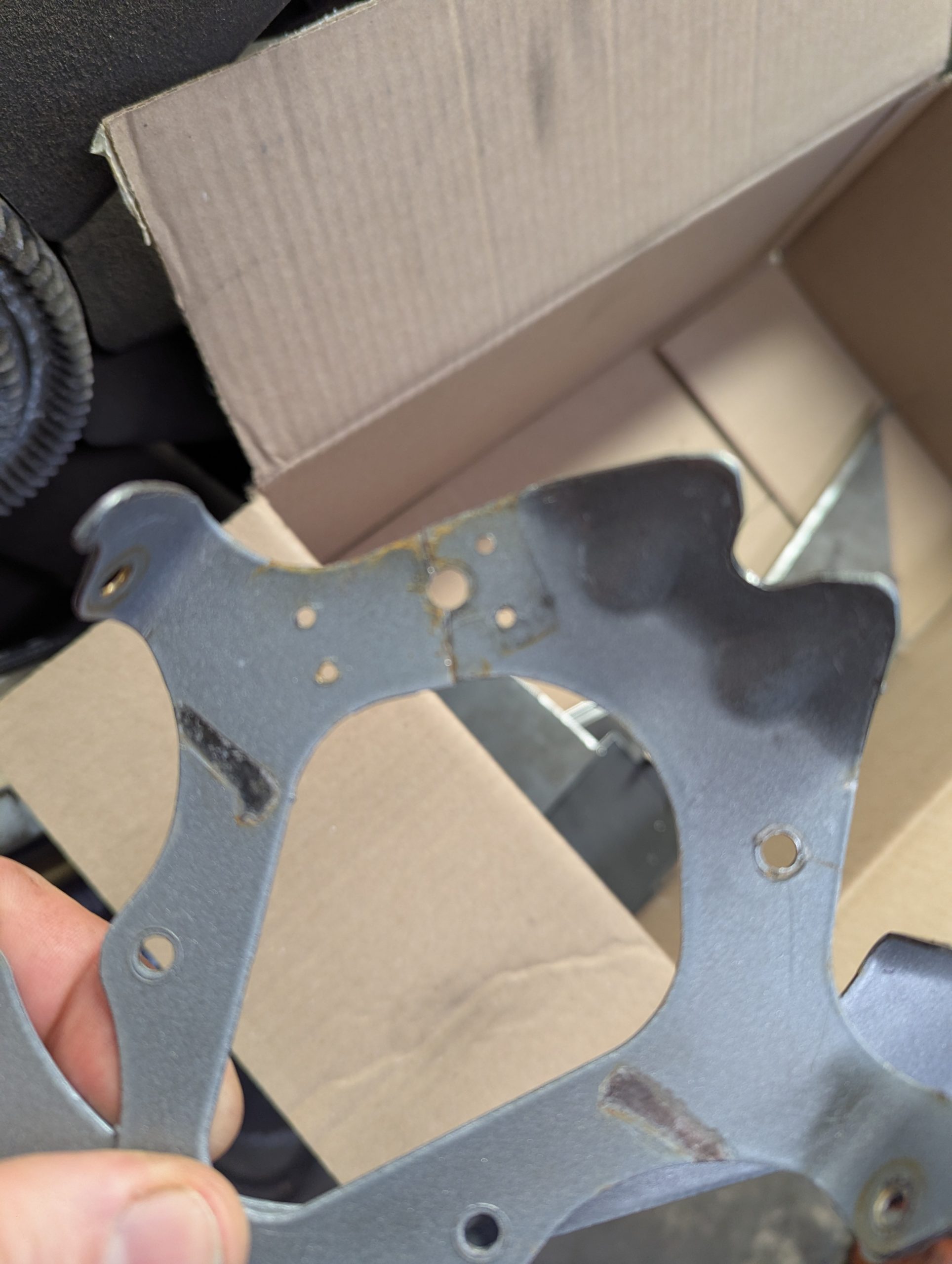
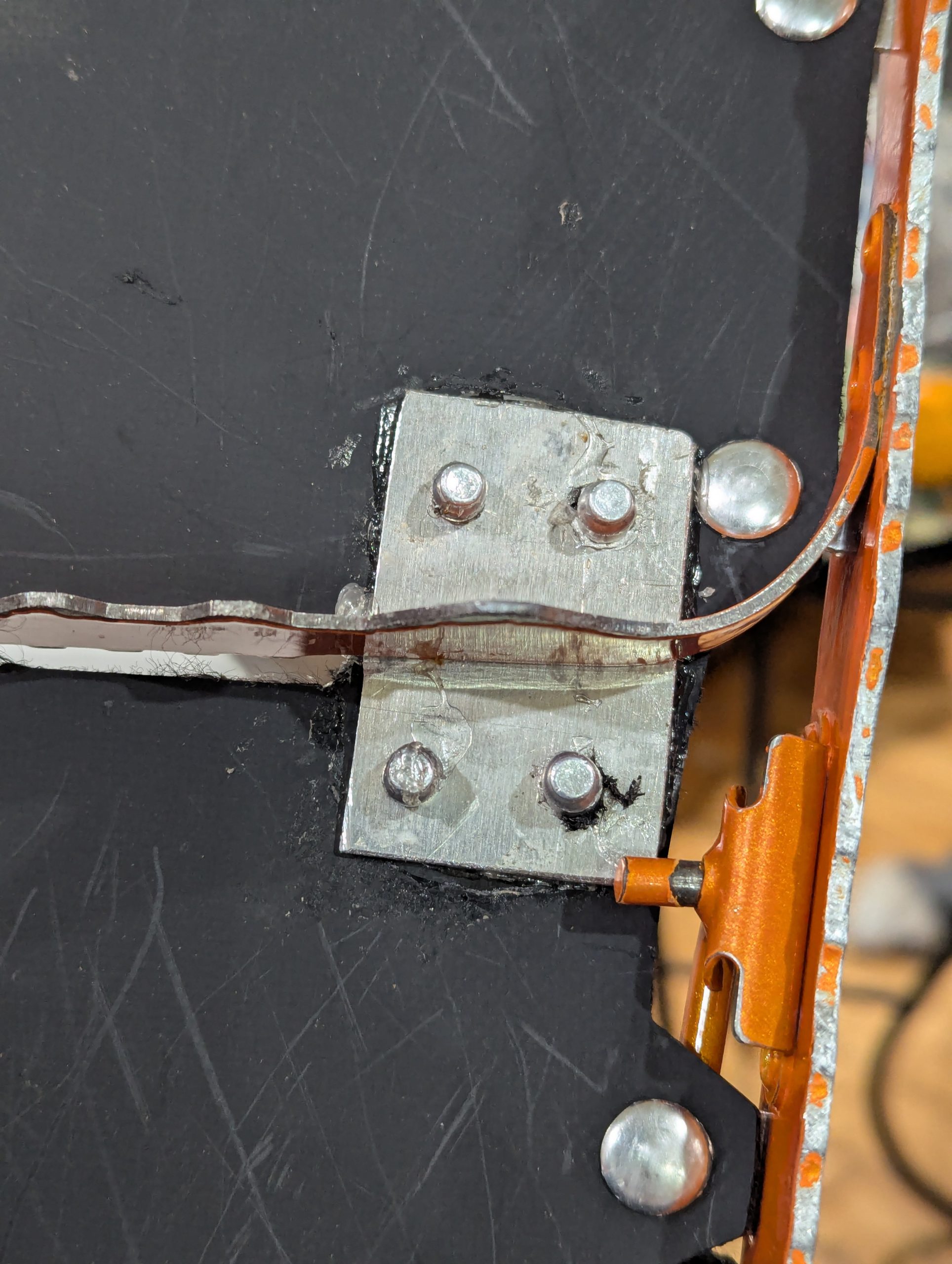
- The main design flaw: the crampon plate is made from relatively thin metal, and they crack where the binding is riveted at the front two rivets. The crack starts at the hole but eventually the plate breaks at that location—exactly as shown in my photos, and this is a common failure reported by others over the years. When that plate goes, the snowshoe is effectively dead. All the clever traction frame and decking in the world doesn’t matter if the crampon is tearing itself apart under your foot.
At first, I dealt with it the quick-and-dirty way: I riveted plates over the cracked area just to keep them usable. It worked, in the same way taping a cracked ski boot “works”—enough to squeeze more life out of them, but it is not a real solution.
Eventually I got tired of nursing along what is, fundamentally, a preventable design weakness in an otherwise excellent product. So I built a proper fix.
The Fix: Repairing the Crampon Plate
MSR will happily sell you replacement crampon/binding plates, and many people simply mail theirs in and get repairs or replacements under warranty. That’s one way to deal with it, but it doesn’t address the underlying design: the plate is thin, and the stress is concentrated around those front rivets. I looked into having a new better plate made but the initial cost was prohibitive, but if I hear from enough other people that this is something they’d like to see I am willing to revisit the idea.
Instead of just patching the crack or buying another identical weak part I added additional material:
- I started with thicker metal stock and cut a new plate with front teeth shaped to bite like the original design.
- The plate is wide and long enough to span the known failure zone, so it doesn’t simply transfer the stress to the next thin point.
- Holes were drilled to match the existing rivet layout and the plate welded into place allowing the new plate to be fastened firmly to the original crampon structure.
- Once mounted, the new plate effectively becomes the working surface: it takes the load, the hits, and the torsion instead of the original.
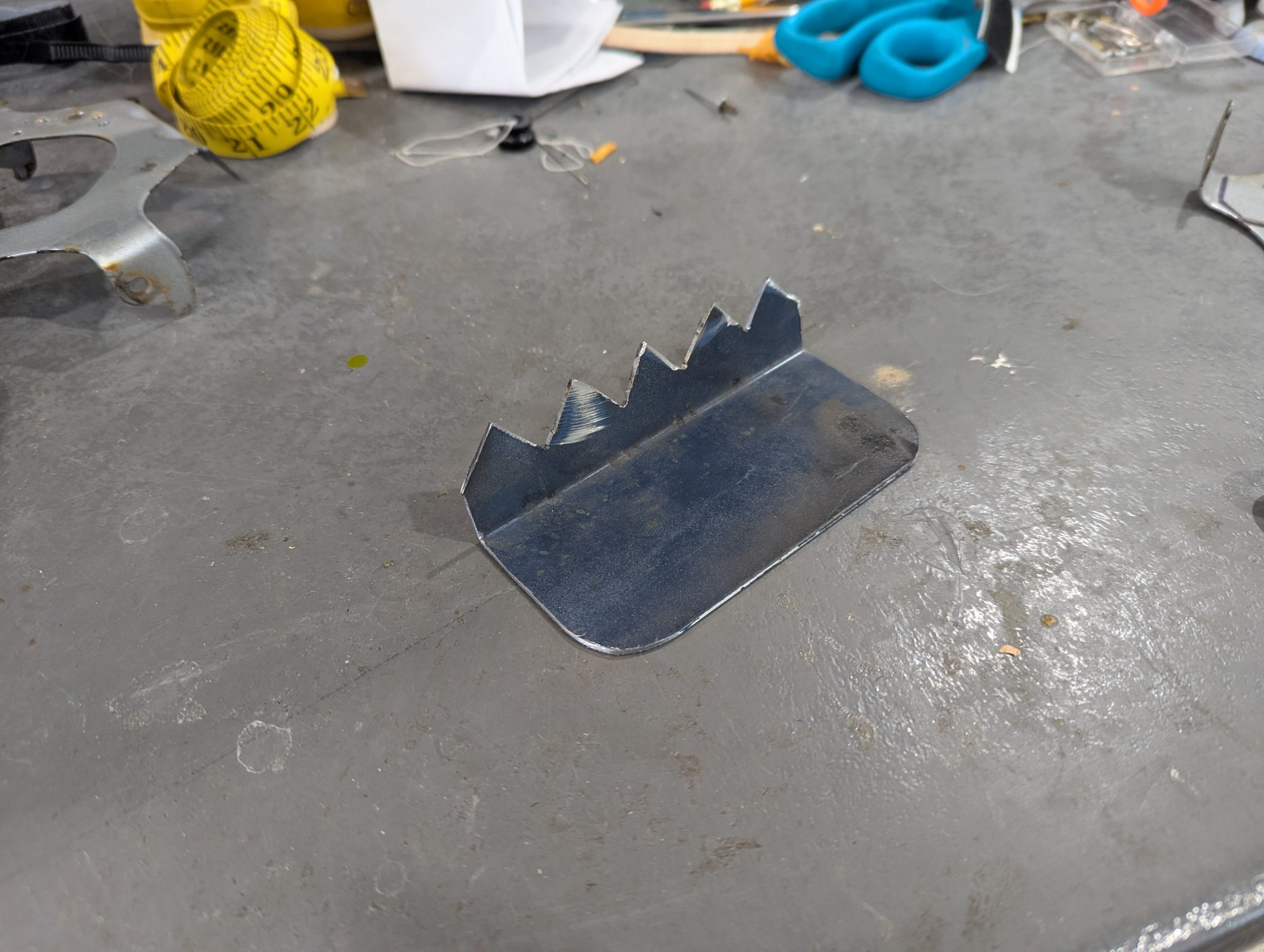
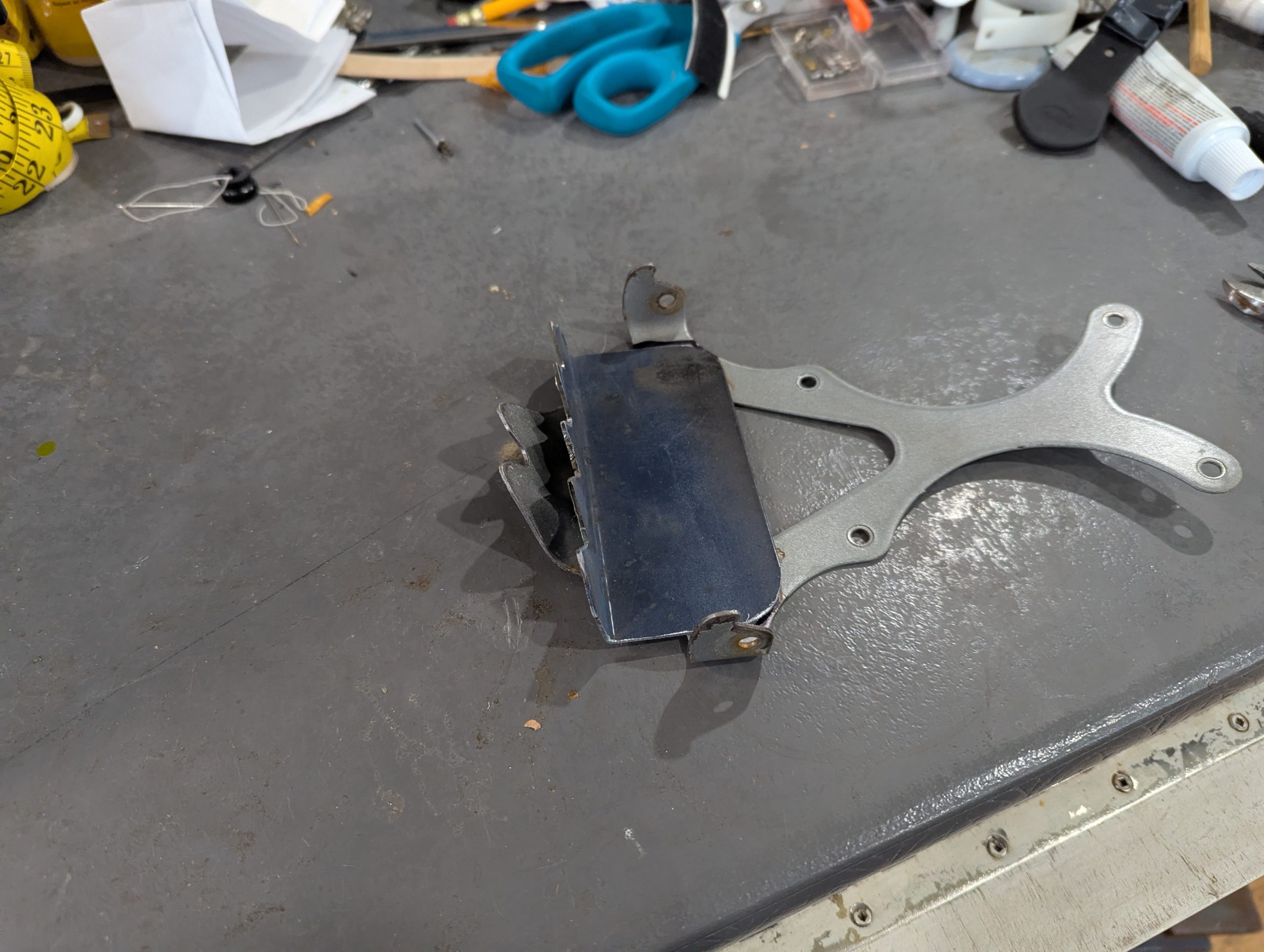
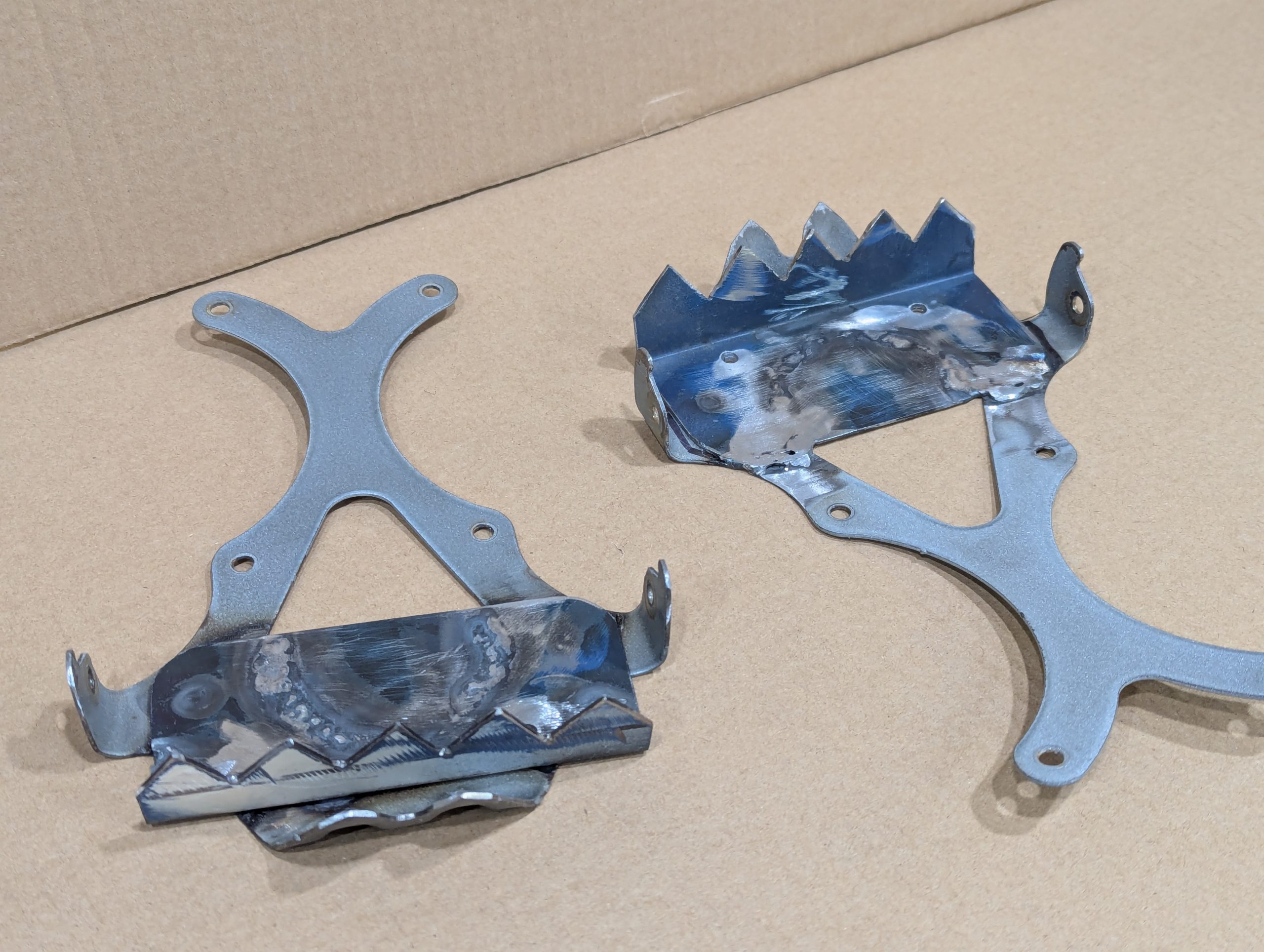
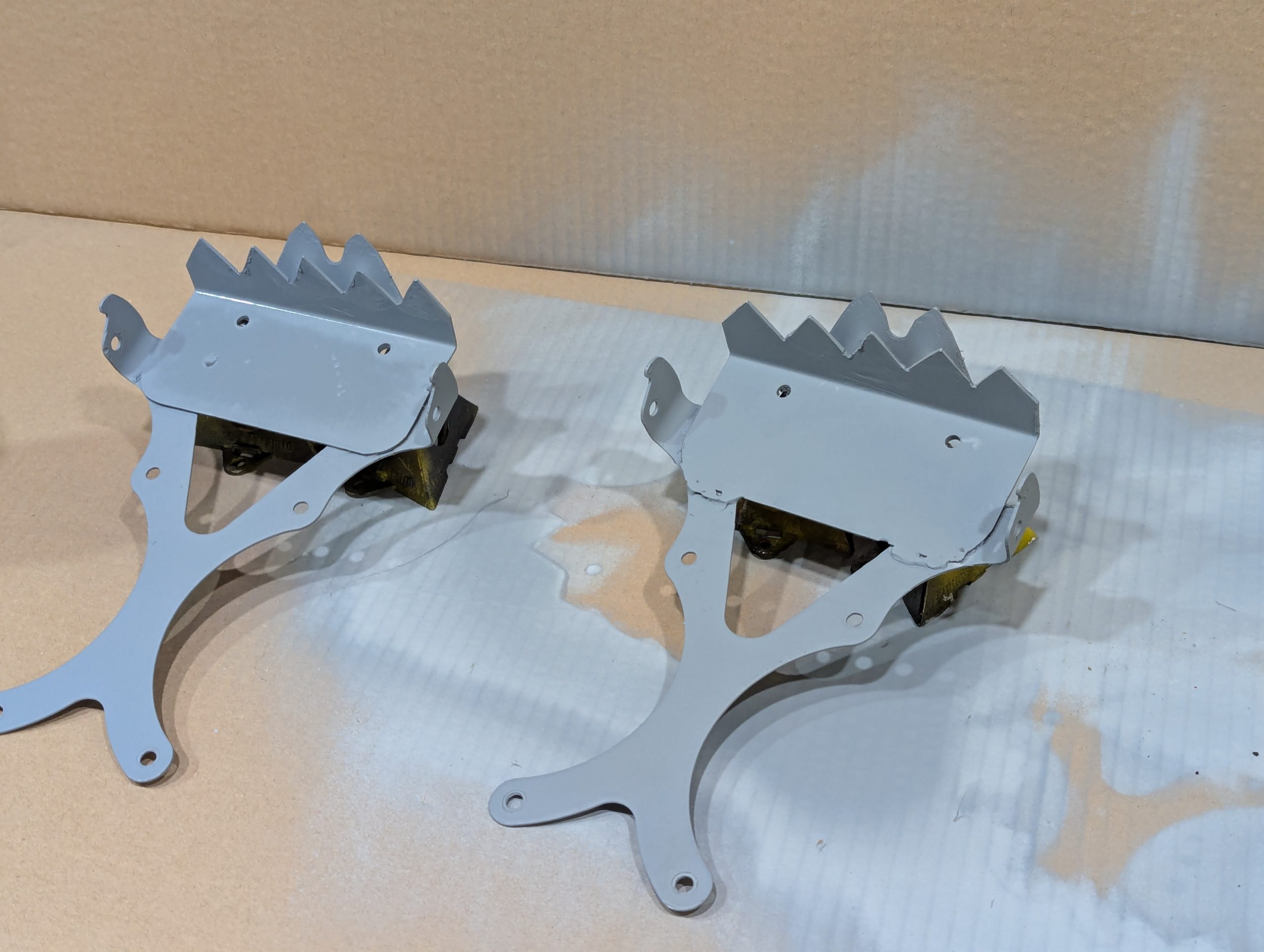
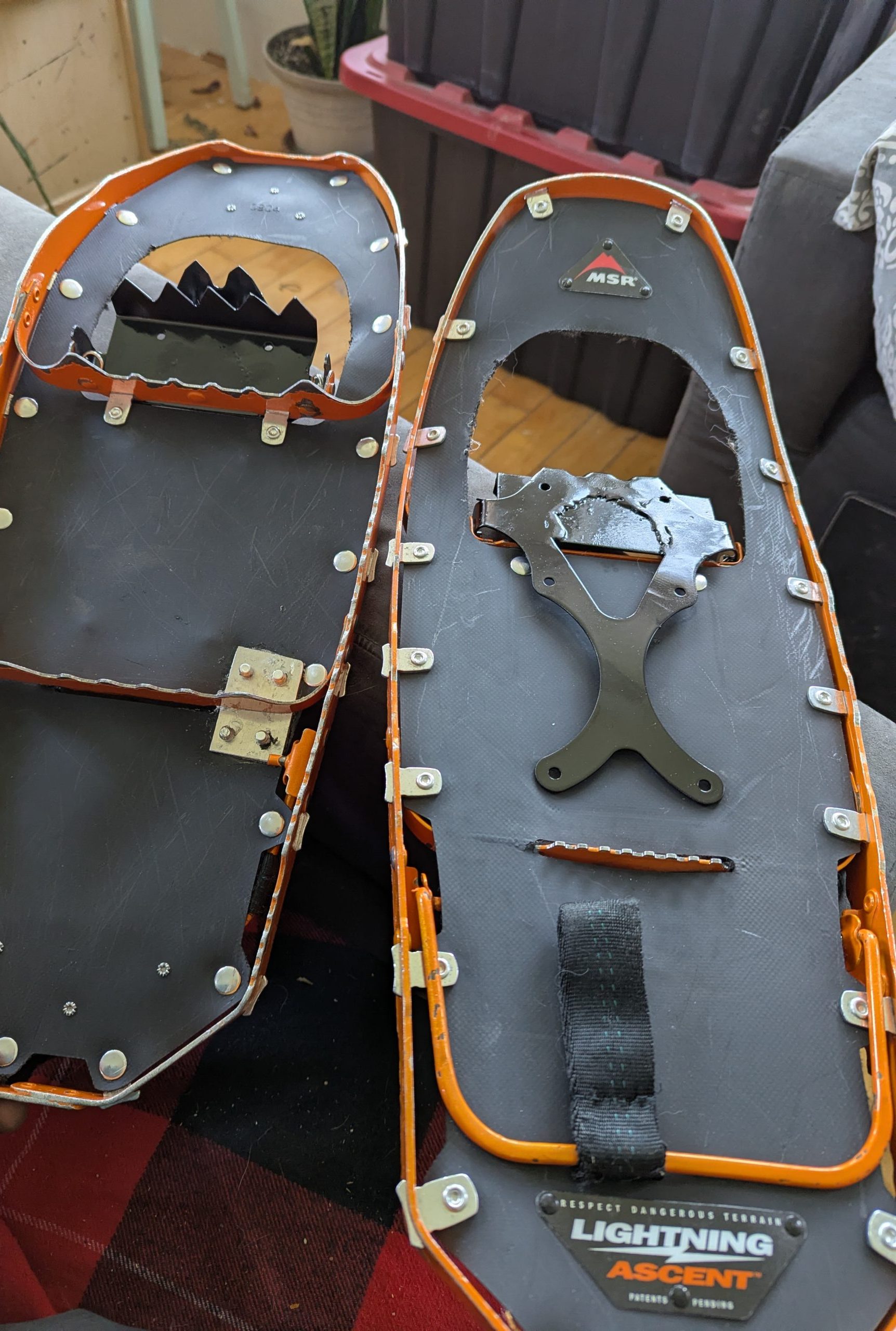
The end result is a crampon assembly that’s actually stronger than what came from the factory, and one that won’t immediately begin sawing itself in half between two rivets the next time you’re side-hilling on thin snow over rock. The ones I made still use thin material but by doubling it up should prevent the failure without adding much mass, also I used scrap I had around the shop.
That fix is the difference between “these snowshoes eventually failed on me” and “these snowshoes have known weak points, but here’s exactly how I fixed them so I can keep using the platform I like.”
For anyone who doesn’t want to machine their own parts, you’re realistically left with two options:
- Keep sending them back to MSR for repair/replacement whenever the plate goes, or
- Accept that, at some point, you’ll be recycling a frame that could have lasted much longer if the core metalwork had been spec’d more generously.
Other Longevity Considerations
Eventually deck failure is almost guaranteed and I have plans to re-deck them using the same coated canvas material used in heavy duty haul bags when the original finally tears more than is worth repairing. Then add plastic protection plates to where the deck impacts the crossbar to extend the life of the new decking.
The Current Design
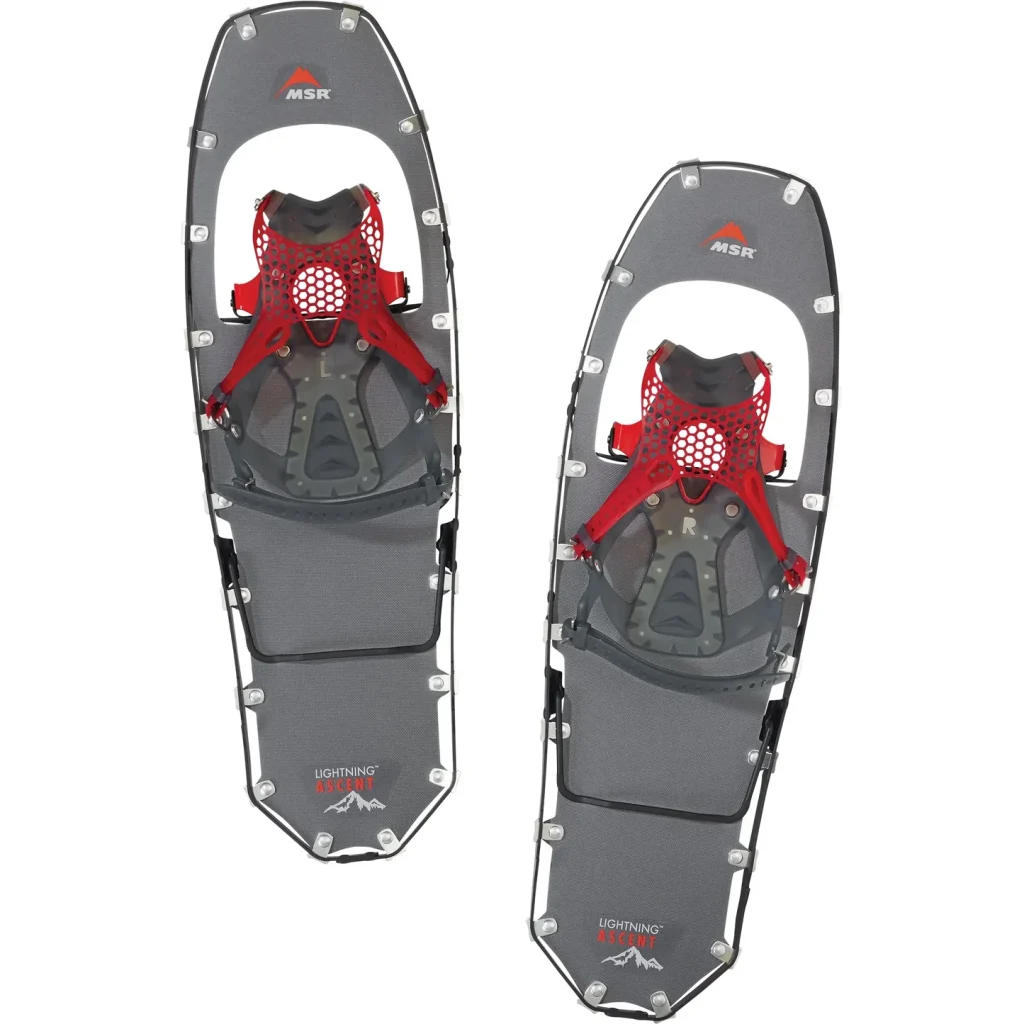
The current Lightning Ascent design is mostly the same as my older pair. The big changes are the ability to mount flotation tails and the adoption of the Paragon binding system. By all accounts the Paragon binding is comfortable and user-friendly, but the underlying crampon plate appears to be essentially unchanged, which means I expect the same cracking issue to persist—and replacement plates are not cheap.
So, With All That… Would I Buy Them Again?
Yes—absolutely. And that’s the annoying part.
I don’t like plastic snowshoes in real winter conditions, and despite their flaws the Lightning Ascents are still the only model I genuinely like using in steep, technical terrain. They climb and traverse better than anything else I’ve tried, and when you’re on serious winter ground that matters more than almost anything.
But I go into it with my eyes open:
- I assume the crampon plate will eventually crack, so step one will be to weld washers around the holes to prevent this.
- I know the deck will wear through at the rear cross-bar, so can use plastic rivets and plates to prevent this.
- The frame edges will get chewed up on rock, but this is inevitable.
At 509CAD from MEC —this kind of built-in weakness is hard to forgive, though they do claim the newer DTX crampon is more durable, I don’t have any to test because when I asked about replacements they were asking over 200CAD. There simply aren’t many alternatives that perform as well, which is why they keep selling and why reviewers keep calling them “durable” even as failure photos continue to show up in forums and repair guides.
Who Should Actually Buy These
- If you spend real time on steep winter mountaineering trails, care about traction more than show-room durability, and you’re either willing to repair them properly or fight MSR’s warranty system when they break then the Lightning Ascent is still one of the best bits of gear you can strap to your feet.
- If your snowshoeing is mostly gentle terrain, packed trails, or snow-covered golf courses, and you don’t ever want to think about metal fatigue or thin plate failures No—you’re paying a premium for performance you won’t fully use and there are better options out there for you at a significantly lower cost.
The MSR Lightning Ascent is an outstanding design built on a few avoidable compromises. Fix the main one, and it becomes very hard to replace. Ignore it, and sooner or later that thin front plate will remind you that “best in class” on paper doesn’t mean “indestructible” in the real world.
Leave a Reply
You must be logged in to post a comment.